
Last Updated: October 25, 2026
Quick Summary
Cracked windshield driving distorts your view of the road, pedestrians, and other vehicles, creating blind spots where hazards hide and slowing your reaction time when you need it most. A crack in your direct line of sight is far more dangerous than one at the edge, and the damage can spread rapidly due to temperature changes, vibration, and road stress.
- A crack in the driver’s direct line of sight requires immediate professional inspection or mobile service; do not drive.
- Cracks under 3 inches that are stable and outside the driver’s view may allow short, cautious trips to a repair facility.
- Temperature extremes, rough roads, and highway speeds accelerate crack spreading; park in shade and avoid maximum defroster heat.
- ADAS cameras and sensors built into the windshield can be disabled by cracks, disabling automatic emergency braking and lane-keeping assistance.
- Complete windshield collapse while driving is rare but increases with crack severity, temperature swings, and high-speed driving on rough roads.
Table of Contents
- Why Windshield Damage Compromises Driver Visibility
- How Long Can You Drive With a Cracked Windshield
- Structural Integrity and Rollover Protection
- Can a Cracked Windshield Collapse While Driving
- Windshield Crack Spreading While Driving
- ADAS Cameras and Safety System Failures
- Windshield Repair or Replacement Decision
- Getting Your Windshield Inspected and Repaired
- Frequently Asked Questions
Why Windshield Damage Compromises Driver Visibility
A cracked windshield isn’t just cosmetic.
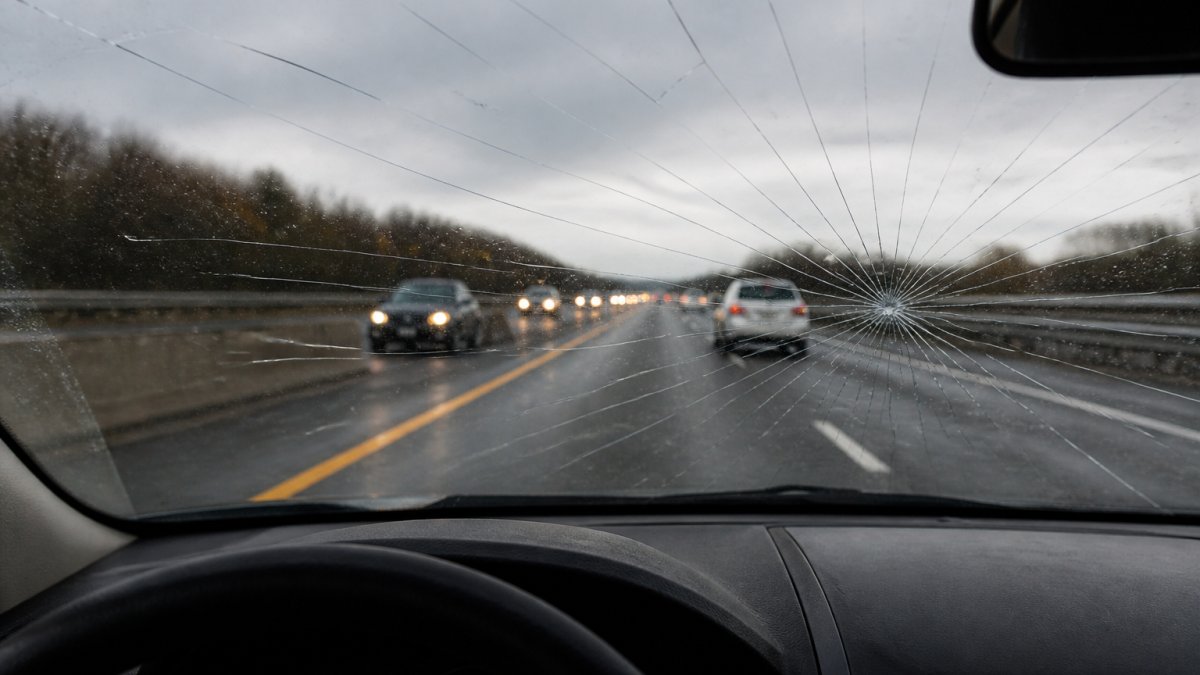
Cracked windshield driving presents a serious hazard: the damage acts like a funhouse mirror, light bends through the fracture, and your reaction time slows when you need it most.
How Long Can You Drive With a Cracked Windshield
There is no single safe mileage or time limit. It depends on where the damage is, how big it is, whether it is spreading, and what your local rules require. Treat a cracked windshield as a short-term, low-speed, get-it-inspected situation, not something to ignore for weeks.
If the crack is in your direct line of sight, spans the driver’s side, reaches the edge of the glass, or is actively spreading, stop driving and arrange an inspection or mobile service. Do not drive on highways or at high speeds with damage in those categories.
A practical triage checklist
1. Where is the damage?
- In the driver’s direct line of sight (a hand-width band across your normal view of the road): do not drive. Arrange mobile service or a tow.
- On the passenger side, outside the driver’s view, and not near an ADAS camera: short, cautious trips to a repair facility may be acceptable.
- At or near the windshield edge or cowl: higher structural risk. Limit driving to a repair facility only.
2. How big is it?
- Chip or crack under about 3 inches and stable: often repairable; short trips to a shop are typically fine.
- Crack roughly 3 to 12 inches: get it assessed promptly; avoid highways and rough roads.
- Crack longer than about 12 inches, or running edge-to-edge: structural concern; drive only to a repair facility, if at all.
3. Is it spreading?
- Mark the crack ends with tape or a grease pencil and check after a day. If they’ve moved, the damage is active, stop delaying.
- New branching, popping, or visible glass movement means stop driving.
4. Can you see clearly?
- Any distortion, double image, glare streak, or blind spot in your forward view is a stop-driving signal, regardless of crack length.
Short-term driving that is usually acceptable
When damage is small, stable, outside the driver’s view, and not near a camera, drive only to an inspection or repair appointment, lower speeds, smooth roads, moderate temperatures. Avoid highway speeds, long trips, pothole-heavy routes, and running the defroster on maximum heat.
When to stop driving entirely
Pull over and arrange help if any of the following apply:
- The crack crosses your line of sight.
- The damage is spreading while you watch.
- You hear popping or creaking, or see the glass flex.
Legal and inspection caveats
Visibility and inspection rules are set at the state level, and enforcement varies, some states treat a crack in the driver’s view as a violation, others focus on annual safety checks. Check your state motor vehicle department’s website for windshield requirements and whether a safety inspection would fail a cracked windshield.
What to do right now
- Photograph the damage with a ruler or coin for scale.
- Mark the crack ends and re-check in 24 hours.
- Avoid temperature extremes and rough roads.
- Book an inspection or mobile service rather than waiting for it to spread.
- If any stop-driving signal applies, arrange a tow or mobile repair.
The longer you wait, the more likely a repairable chip becomes a replacement. Time is the variable you control.
Use this checklist to assess whether your cracked windshield is safe to drive on or requires immediate professional attention.
| Damage Category | Severity Level | Driving Action |
|---|---|---|
| In driver’s direct line of sight | Stop driving | Arrange mobile service or tow |
| Passenger side, outside driver’s view | Low risk | Short, cautious trips to repair facility |
| At or near windshield edge or cowl | Higher risk | Drive only to repair facility |
| In front of ADAS camera or sensor | Urgent | Treat as urgent; limit driving |
| Chip or crack under 3 inches, stable | Repairable | Short trips to shop typically acceptable |
| Crack 3 to 12 inches | Moderate | Get assessed promptly; avoid highways |
| Crack longer than 12 inches or edge-to-edge | Structural concern | Drive only to repair facility, if at all |
| Crack actively spreading or glass flexing | Critical | Stop driving immediately |
Structural Integrity and Rollover Protection
Your windshield is part of your vehicle’s structural system, engineered to support the roof during a rollover and help airbags deploy correctly.
Laminated glass, two glass layers bonded to a plastic interlayer, keeps the glass from shattering and provides structural strength. When a windshield is compromised, that support weakens.
In a rollover, an intact windshield helps prevent roof collapse; a cracked one may not, and the roof can cave inward, trapping occupants or causing serious injury.
Damage doesn’t have to be severe to reduce structural integrity.
Can a Cracked Windshield Collapse While Driving
Complete windshield collapse while driving is rare, but it happens. Risk increases with crack severity, temperature extremes, and road conditions.
A windshield collapses when stress exceeds the remaining glass strength.
Conditions that increase collapse risk:
- Extreme temperature swings (freezing mornings, hot afternoons)
- Large cracks running edge-to-edge
- Impact damage combined with existing cracks
Sudden collapse means the windshield falls inward: you lose visibility, wind floods the cabin, and debris enters the vehicle.
Some drivers report warning signs before collapse: popping or creaking sounds, visible movement in the glass, or small pieces falling.
Windshield Crack Spreading While Driving
Cracks spread, it’s the nature of damaged glass.
Every drive brings vibration, every temperature change stresses the glass, and every bump sends shock waves through the structure, each pushes the crack slightly wider.
Factors that accelerate crack spreading:
- Temperature extremes (freezing at night, heating during the day)
- Driving on bumpy or pothole-filled roads
- Sudden acceleration or hard braking
Thermal stress is particularly damaging: cold glass contracts, hot glass expands, and a crack sits at the boundary where the glass on either side pulls in opposite directions.
You can slow spreading by parking in shade, avoiding the defroster on maximum heat, and driving carefully on rough roads, but you can’t stop it entirely.
ADAS Cameras and Safety System Failures
Modern vehicles have cameras and sensors built into the windshield as part of Advanced Driver Assistance Systems (ADAS).
ADAS cameras look through the glass to see the road ahead.
When ADAS fails, you lose features like:
- Automatic emergency braking
- Lane-keeping assistance
- Adaptive cruise control
These systems work in the background. You might not notice they’re gone until an emergency happens, and by then, it’s too late.
Recalibration after replacement is essential: the new glass must align perfectly with the camera system, since even small misalignment causes ADAS to malfunction.
Windshield Repair or Replacement Decision
Not every cracked windshield needs replacement, but the decision is more nuanced than a size cutoff. Repair preserves original factory glass and the factory bond; replacement restores full structural and optical performance. The right call depends on damage type, location, depth, and whether your vehicle has cameras behind the glass.
When repair is usually possible
Repair injects a specially formulated acrylic resin into the damaged area, then cures it with ultraviolet light. The resin fills the void, bonds the glass faces back together, and restores much of the original strength while stopping the spread.
Repair is commonly appropriate when:
- The damage is a chip, bullseye, star break, or short crack, roughly the size of a dollar bill or smaller.
- The crack is under about 12 inches and not running to the edge.
- The damage is outside the driver’s direct line of sight.
Repair limits to know:
- Resin repairs are cosmetic and structural improvements, not invisible fixes. A faint mark often remains.
- Repairs on cracks that have reached the edge or the cowl are less reliable because edge stress continues to act on the glass.
- If the damage sits in a camera’s field of view, repair can leave an optical distortion the system may interpret as an object.
When replacement is the right call
Replacement is typically necessary when:
- The crack is longer than about 12 inches or runs edge-to-edge.
- There are multiple cracks or a crack that branches.
- Damage is in the driver’s vision zone.
What the repair process involves
A technician cleans the break, removes loose glass and moisture, mounts an injector over the damage, and pulls a vacuum to evacuate air. Resin is injected under pressure, cured with UV light, and polished. The vehicle can usually be driven the same day, and a single chip takes roughly 30 to 60 minutes.
What the replacement process involves
Replacement is a multi-step job:
- The old windshield is removed, often by cutting the urethane adhesive with a cold knife or wire.
- The frame is cleaned and primed; any rust or damage is addressed.
- New urethane adhesive is applied and the new glass is set and aligned.
- The adhesive cures, safe drive-away time varies by product and conditions, commonly a few hours, and the vehicle should not be driven until the shop clears it.
- If the vehicle has ADAS cameras, recalibration is performed.
ADAS recalibration is not optional
Cameras and sensors mounted behind the windshield, lane-keeping, automatic emergency braking, adaptive cruise control, forward collision warning, pedestrian detection, are aimed through the glass.
Two calibration approaches exist:
- Static calibration: the vehicle is positioned in front of targets at specified distances in a controlled bay.
- Dynamic calibration: the vehicle is driven on a road with clear lane markings under specified conditions while the system relearns.
Some vehicles require both. Skipping recalibration can leave safety systems disabled, mis-aimed, or giving false warnings. Ask the shop in advance whether recalibration is included and whether they have the targets and equipment for your make and model.
Insurance and cost next steps
Windshield damage is often covered under the comprehensive portion of an auto policy, and many insurers waive or reduce the deductible for repair versus replacement. Coverage, deductible amounts, and any glass-specific endorsements vary by policy and state. Practical steps:
- Check your declarations page for comprehensive coverage and your deductible.
- Ask your insurer whether repair is covered with a deductible waiver and whether replacement requires pre-authorization.
- Confirm whether the shop works with your insurer or whether you pay and seek reimbursement.
- Ask whether recalibration is covered, some policies treat it as a separate line item.
- Get the quote in writing before work begins, including calibration.
If the damage is repairable, repair is almost always the lower-cost and lower-risk option, it preserves factory glass and avoids recalibration. If replacement is required, confirm calibration is included in the quote before you book.
National Highway Traffic Safety Administration windshield standards establish federal safety requirements for glazing. Insurance Information Institute coverage details explains how comprehensive coverage typically handles glass claims. Get a quote for windshield repair or replacement to compare repair and replacement options for your vehicle.
Getting Your Windshield Inspected and Repaired
Professional inspection is the first step. Windshield Replacement services are available to address damage that cannot be repaired.
What to expect during inspection:
- Visual examination of all damage
- Measurement of cracks and chips
- Assessment of ADAS camera alignment
Once you understand your options, you can make an informed decision. Consumer Reports auto glass guidance recommends getting professional assessment rather than attempting DIY solutions.
Replacement takes longer but is still manageable. The old windshield is carefully removed. The frame is cleaned and prepared.
If you’re concerned about cost, Insurance Information Institute coverage details explains how windshield damage is often covered under comprehensive insurance. Buy Now/ Pay Later Financing options are available to make repairs affordable.
We recommend getting your windshield inspected as soon as you notice damage.
Insurance can often cover repair or replacement. Don’t delay, the longer you wait, the more likely the damage will spread.
Frequently Asked Questions
Is it unsafe to drive around with a cracked windshield?
Yes. A cracked windshield reduces your line of sight, weakens the vehicle’s structural integrity, and can fail suddenly during a collision or rollover. Even small cracks can spread rapidly due to temperature fluctuations, road vibration, and potholes. Most states have safety laws requiring windshields to be free of damage in the driver’s line of sight. Driving with a cracked windshield puts you and your passengers at unnecessary risk and may result in fines during traffic stops.
What happens if I drive with a cracked windshield for a long time?
Prolonged driving with windshield damage increases multiple risks. The crack will likely spread due to thermal stress, road impacts, and vibration, making repair impossible and requiring full replacement instead. Your vehicle loses structural support during collisions or rollovers, and airbags may deploy improperly without proper windshield retention. Additionally, modern vehicles with ADAS cameras may experience sensor misalignment, disabling critical safety features like automatic emergency braking and lane-keeping assist.
Can a cracked windshield affect airbags or vehicle safety systems?
Absolutely. The windshield provides critical support for airbag deployment and helps retain passengers during collisions. A compromised windshield can cause airbags to deploy at incorrect angles, reducing their effectiveness. In rollover situations, a weakened windshield cannot provide the roof support needed for rollover protection. Modern vehicles also mount ADAS cameras in the windshield area; damage can misalign these sensors, disabling driver-assistance features that depend on accurate calibration for safe operation.
When should I stop driving with a cracked windshield?
Stop driving immediately if the crack is in your line of sight, if it’s longer than a few inches, or if you notice it spreading. If the damage is on the driver’s side or directly in front of the steering wheel, it’s a safety violation in most states and creates a visual obstruction that increases accident risk. Even if the crack is small, have a professional inspection performed right away. A certified technician can assess whether repair is possible or if replacement is necessary, and they can recalibrate ADAS systems if your vehicle has them.
Driving with a cracked windshield puts you at risk. Vision problems, structural weakness, and ADAS failures create hazards you can’t see coming. Cracked or damaged windshield? Titan Auto Glass provides expert windshield repair and replacement with certified technicians who handle ADAS recalibration to ensure your safety systems work correctly. Get started with a professional inspection and discover how quickly we can restore your vehicle’s safety and clarity.
