
Table of Contents
- How Windshield Replacement Insurance Deductibles Work in Texas
- Comprehensive Coverage and Windshield Damage
- Windshield Chip Repair Insurance Coverage Options
- Comprehensive Deductible for Windshield Replacement
- How to File an Auto Glass Insurance Claim
- ADAS Recalibration Insurance Coverage After Replacement
- Repair vs. Replacement: Making the Right Choice
- Paying Out of Pocket vs. Using Insurance
- Frequently Asked Questions
Last Updated: October 18, 2026
How Windshield Replacement Insurance Deductibles Work in Texas
A windshield replacement insurance deductible in Texas is the amount you pay out of pocket before your insurance coverage kicks in for glass damage. Texas does not require insurers to waive windshield deductibles, which means your policy terms determine what you actually pay when damage occurs.
Understanding how deductibles work is critical because it directly affects your out-of-pocket costs. If your comprehensive coverage includes a $500 deductible and your windshield replacement costs $600, you’d pay $500 and insurance covers $100. The deductible applies per claim, not per year, so multiple glass incidents mean multiple deductible payments.
At Titan Auto Glass, we work with customers daily who are surprised by how their deductible interacts with repair versus replacement scenarios. The key distinction: your deductible only applies when you file an insurance claim.
Check your policy documents for the exact deductible amount listed under comprehensive coverage. Many drivers don’t know their deductible until they need it, which is why calling your insurer before scheduling service prevents surprises at the point of service.
Comprehensive Coverage and Windshield Damage
Comprehensive coverage is the policy component that typically covers windshield damage from road debris, weather, vandalism, or accidents not involving another vehicle. This coverage protects you when damage isn’t your fault, though it does come with a deductible.
Collision coverage, by contrast, applies when your vehicle hits something or is hit by another vehicle. Windshield damage from a collision would fall under collision coverage, which often carries a different (usually higher) deductible than comprehensive. Understanding which coverage applies to your specific incident matters because it determines your out-of-pocket cost.
Many policies offer optional glass coverage or a glass endorsement that can reduce or eliminate the deductible specifically for glass claims. Some insurers waive the comprehensive deductible for glass-only claims, while others offer reduced deductibles like $100 or $250 instead of the standard $500.
Your comprehensive deductible applies to windshield claims unless you’ve added a glass endorsement or your insurer offers automatic glass-only deductible waiver. Know which applies to your policy before damage occurs.
Windshield Chip Repair Insurance Coverage Options
Windshield chip repair insurance coverage often receives more favorable treatment than full replacement under many policies.
The logic is practical: repairing a small chip costs significantly less than replacing an entire windshield, so insurers incentivize early intervention. A chip that could spread into a crack requiring full replacement might be contained through timely repair.
However, this varies substantially. Some policies lump chip repairs under the same comprehensive deductible as replacements, meaning you’d pay your full deductible even for a minor repair. Others offer a dedicated chip repair benefit with a separate, lower deductible or none at all.
The practical takeaway: if you notice a chip, contact your insurer before seeking repair. Ask specifically whether chip repair is covered under a separate benefit or whether your standard comprehensive deductible applies. This conversation takes two minutes and can save you hundreds of dollars.
Comprehensive Deductible for Windshield Replacement
Your comprehensive deductible for windshield replacement in Texas is the fixed amount you pay when filing a claim for full glass replacement.
The comprehensive deductible applies once per claim. If your windshield replacement costs less than your deductible, you pay the full replacement cost out of pocket, your insurance won’t contribute anything because the claim amount doesn’t exceed your deductible threshold.
Some policies allow you to choose your deductible amount when purchasing or renewing coverage. A higher deductible (like $1,000) typically means lower monthly premiums, while a lower deductible (like $250) means higher premiums but less out-of-pocket cost when claims happen.
Optional glass coverage can modify this structure. A glass endorsement might reduce your windshield deductible to $100 or $0 specifically for glass claims, leaving your standard comprehensive deductible unchanged for other types of damage.
How to File an Auto Glass Insurance Claim
Filing an auto glass insurance claim involves several straightforward steps, though the exact process varies slightly by insurer. Start by contacting your insurance company as soon as damage occurs, don’t wait.
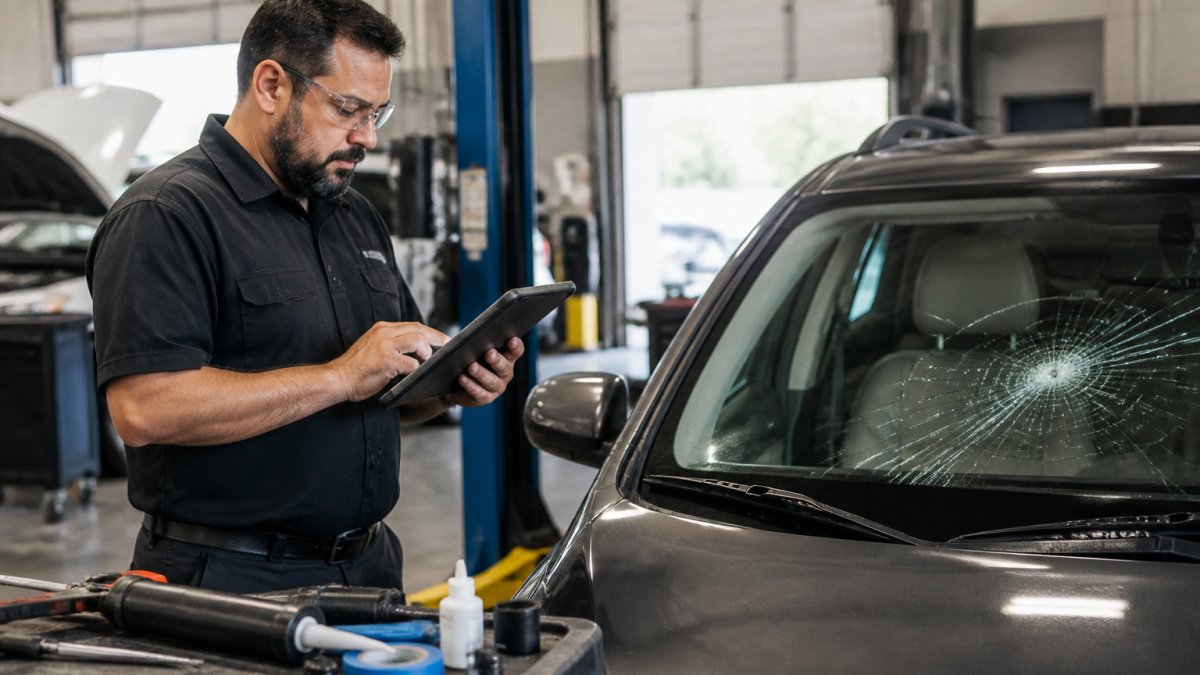
Your insurer will ask when the damage occurred, how it happened, and whether you have comprehensive coverage. Ask whether they have a network of approved shops or if you can use any certified technician.
Document the damage with photos before any repair work begins. Take clear pictures showing the damage location, size, and the surrounding area. These images support your claim and help the insurer process it faster.
After you file, the insurer typically issues a claim number and explains next steps. Some companies send an adjuster to inspect the damage; others approve claims based on your description and photos.
Never delay filing a claim. Waiting weeks or months can complicate the process and may result in denial if the insurer suspects the damage is older than reported. File the day damage occurs or the next business day.
ADAS Recalibration Insurance Coverage After Replacement
Advanced Driver Assistance Systems (ADAS) recalibration after windshield replacement is increasingly important as modern vehicles rely on cameras and sensors mounted behind the windshield.
There are two recalibration methods, and the distinction matters for both cost and coverage:
- Static recalibration uses target boards placed at measured distances in front of the vehicle in a controlled bay. It is common on vehicles where the camera needs a precise reference frame.
- Dynamic recalibration requires driving the vehicle at specified speeds on a marked road so the system can relearn its reference points. Some vehicles require both static and dynamic procedures.
Most insurance policies do not automatically cover ADAS recalibration as a separate line item. The glass replacement is covered under comprehensive coverage, but recalibration often isn’t explicitly included.
Some insurers are beginning to recognize this issue and will cover recalibration as part of the glass claim if the vehicle requires it.
Titan Auto Glass specializes in post-replacement ADAS recalibration, ensuring your vehicle’s safety systems function correctly after glass service.
When scheduling windshield replacement, ask the service provider whether ADAS recalibration is needed for your vehicle model. Modern vehicles (roughly 2015 and newer with advanced safety features) almost always require it.
Skipping recalibration to save money can leave safety features misaligned. Confirm in writing whether your insurer treats recalibration as part of the glass claim before you authorize the work.
Repair vs. Replacement: Making the Right Choice
Deciding whether to repair or replace your windshield depends on several factors: damage size, location, depth, and your vehicle’s safety systems.
Small chips (smaller than a quarter) in the outer edges of the windshield are typically repairable. Repair costs less, preserves the original glass, and usually takes under an hour.
Cracks longer than 12 inches, damage in the driver’s direct line of sight, or damage near the edges where the windshield bonds to the frame typically requires full replacement.
Location matters significantly. Damage on the passenger side near the edge might be repairable, while the same damage directly in front of the driver is a replacement candidate.
Consider also your vehicle’s age and ADAS features.
Repair is best for: small chips, damage outside the driver’s direct line of sight, vehicles without ADAS, and situations where your insurance covers repair with minimal or zero deductible.
Replacement is best for: cracks longer than 12 inches, damage in the driver’s line of sight, damage affecting structural integrity, and vehicles with ADAS features requiring recalibration.
Paying Out of Pocket vs. Using Insurance
Choosing between paying out of pocket and filing an insurance claim requires weighing several factors: your deductible, the repair or replacement cost, your claim history, and potential premium increases.
The break-even point is simple: filing a claim only saves you money when the covered service cost exceeds your deductible. Below that line, you pay the full bill either way, and filing a claim adds a claim to your record for no financial benefit.
Worked examples help make this concrete. These use realistic ranges, not quotes:
Claim history and premium impact deserve consideration. Some insurers increase premiums after glass claims, while others don’t. Ask your insurer directly: “Will filing a glass claim affect my premium?” Some companies offer accident forgiveness or glass-claim forgiveness that prevents premium increases for specific claim types. Also ask whether a glass claim is recorded as a comprehensive claim, since that can matter at renewal.
If you’re unsure about your coverage or the financial impact, contact your insurer before committing to service. A brief conversation clarifies your deductible, what’s covered, whether recalibration is included, and whether the claim would affect your premium. This information lets you make an informed decision.
Use this rule of thumb: if the service cost is within a few hundred dollars of your deductible, paying out of pocket usually wins once you account for claim history. If the cost is well above your deductible, filing is usually the better financial move.
Frequently Asked Questions
Does auto insurance cover windshield replacement in Texas?
Most auto insurance policies include comprehensive coverage, which covers windshield damage from road debris, hail, and weather events. However, coverage depends on your specific policy terms. Comprehensive coverage typically applies to windshield replacement, though you may need to pay a deductible unless you have a zero-deductible glass endorsement. Check your policy documents or contact your insurer to confirm your windshield replacement coverage.
Will I have to pay a deductible to replace my windshield?
Whether you pay a deductible depends on your policy. Standard comprehensive coverage usually includes a deductible (often $250-$1,000), which you pay before insurance covers the rest. Many insurers offer optional zero-deductible or full-glass coverage endorsements that waive the deductible for glass-only claims. Review your policy or call your insurer to learn whether your current plan includes this option or if you can add it.
What is the difference between windshield repair and replacement coverage?
Windshield repair (fixing a chip or small crack) is often covered at no cost or with a lower deductible under comprehensive coverage or a glass endorsement. Windshield replacement (installing a new windshield) typically requires you to pay your full comprehensive deductible unless you have a zero-deductible glass endorsement. Some insurers cover repair completely before requiring replacement, so asking about repair options first can save money.
How do I file an auto glass insurance claim for windshield damage?
Contact your insurance company as soon as damage occurs and provide your policy number, vehicle information, and photos of the damage. Your insurer will guide you through their claim process, which may include selecting an approved repair provider or getting authorization before work begins. Keep documentation of all communications and the final repair invoice. Most insurers process glass claims quickly, often within days.
Does insurance cover ADAS recalibration after windshield replacement?
ADAS recalibration coverage varies by insurer and policy. Some comprehensive policies include it; others treat it as a separate service. Modern vehicles with advanced driver assistance systems (cameras, radar, sensors) require recalibration after windshield replacement to ensure safety features work correctly. Ask your insurer whether recalibration is covered under your claim or if it’s an additional out-of-pocket cost before approving replacement work.
Will filing a windshield claim affect my insurance rates?
In many cases, glass-only claims do not increase your premium because they are considered comprehensive claims rather than at-fault accidents. However, rates depend on your insurer’s policy and your claim history. Contact your insurance company to ask specifically whether a windshield claim will impact your rates. Some insurers offer claim forgiveness or glass-claim exclusions that protect your premium.
What is a zero-deductible or full-glass coverage endorsement?
A zero-deductible or full-glass coverage endorsement is an optional add-on to your comprehensive coverage that waives the deductible for windshield repair and replacement claims. Instead of paying your standard deductible (often $250-$1,000), you pay little to nothing for glass damage. This endorsement typically costs a small amount per year and is worth considering if you drive frequently or live in an area with high hail or debris risk.
How do I check whether my policy includes glass coverage?
Review your insurance policy documents, which list all coverage types and endorsements. Look for sections labeled ‘comprehensive coverage,’ ‘glass coverage,’ or ‘glass endorsement.’ You can also log into your insurer’s online account or call your agent directly and ask about your current glass coverage, deductible amount, and any optional zero-deductible endorsements available to you.
Windshield damage is frustrating, but understanding your insurance coverage takes the guesswork out of the decision. At Titan Auto Glass, our certified technicians work with your insurance to handle the claim process smoothly while ensuring your windshield replacement meets safety standards and includes proper ADAS recalibration when needed. Get a quote today and let us manage the details so you can get back on the road safely.